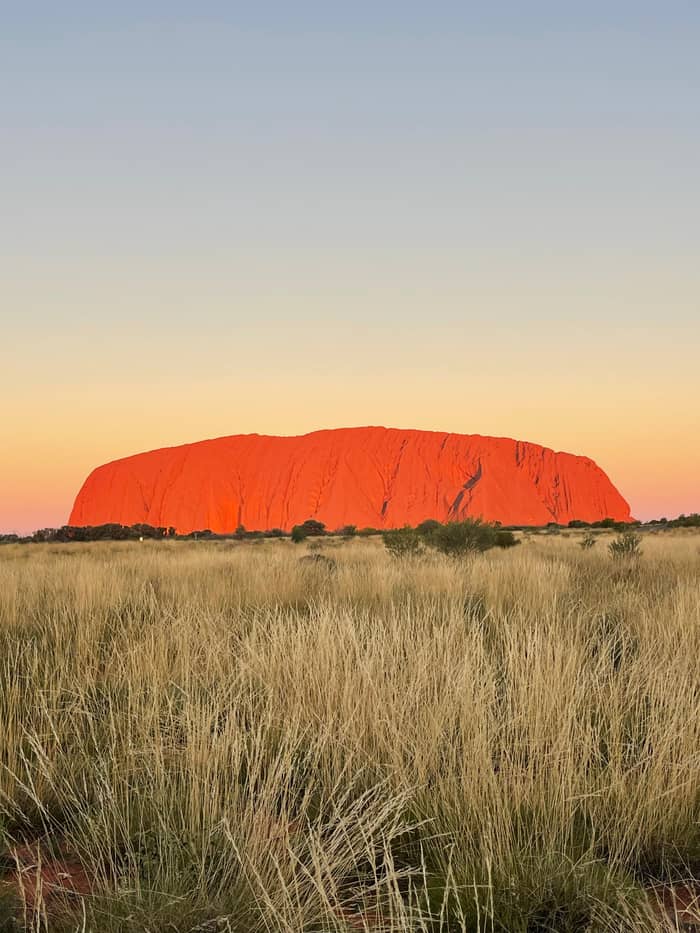
Permanent water
Mutitjulu Waterhole
End of the Kuniya walk
See the toursGuides
Language
Currency
See open datesfrom $147 · cancelling is freeWhere is your stop
Sacred sites and sunset at Uluru, with sparkling wine
★ 4.5 · 489 guest reviews
The quick take
An Uluru sacred sites tour walks you to Mutitjulu Waterhole on the Kuniya walk, past rock art, then to the Cultural Centre and the sunset area.
At the base
Discover 15 stops
Pick a route, then tap a marker or a stop for notes and a Google Maps link.
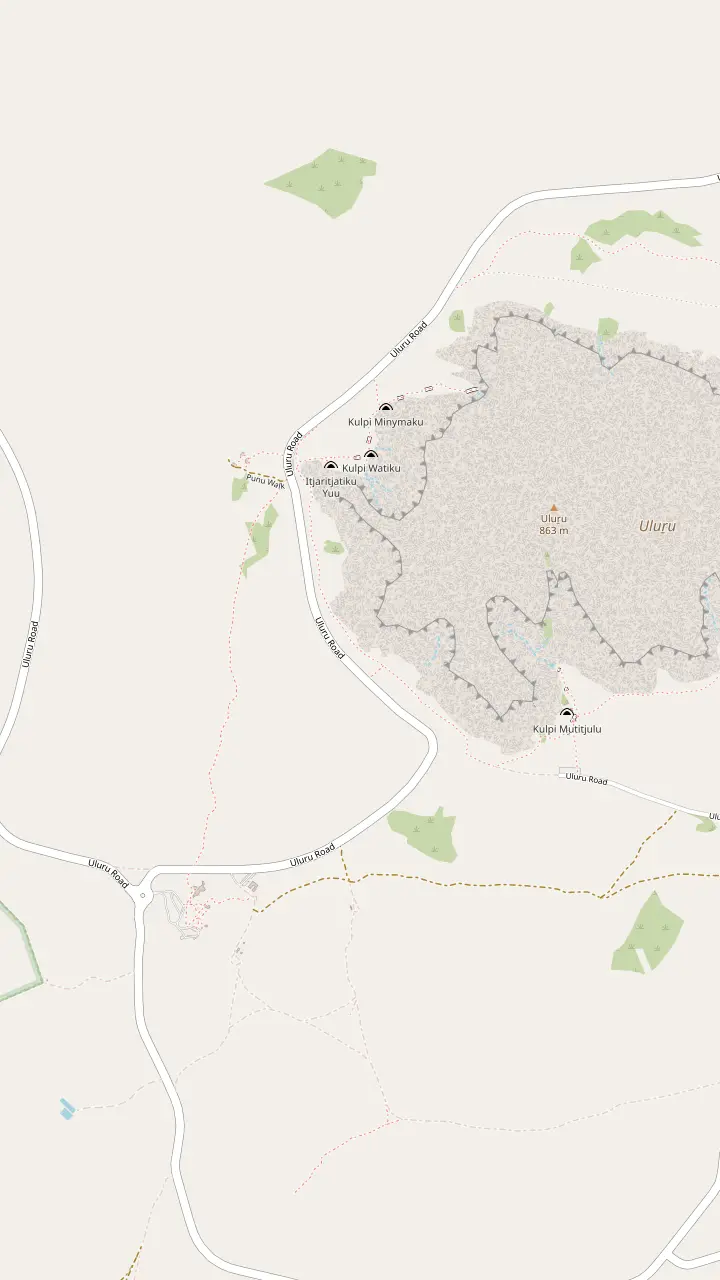
A 1 km return path from the Kuniya carpark to Mutitjulu Waterhole, one of the few permanent water sources at the rock.
Google MapsThe section of the base walk linking the Kuniya walk with the Mala carpark, where the rock slants down to the path.
Google MapsFrom the Mala carpark to Kantju Gorge: 2 km return, the route of the free ranger-guided walk.
Google MapsQuiet at sunset, when the setting sun lights the gorge walls a fiery red.
Google MapsLinks the Mala carpark with the Cultural Centre; not part of the base walk loop.
Google MapsOpen 7 am to 5.45 pm daily; allow at least two hours.
Google Maps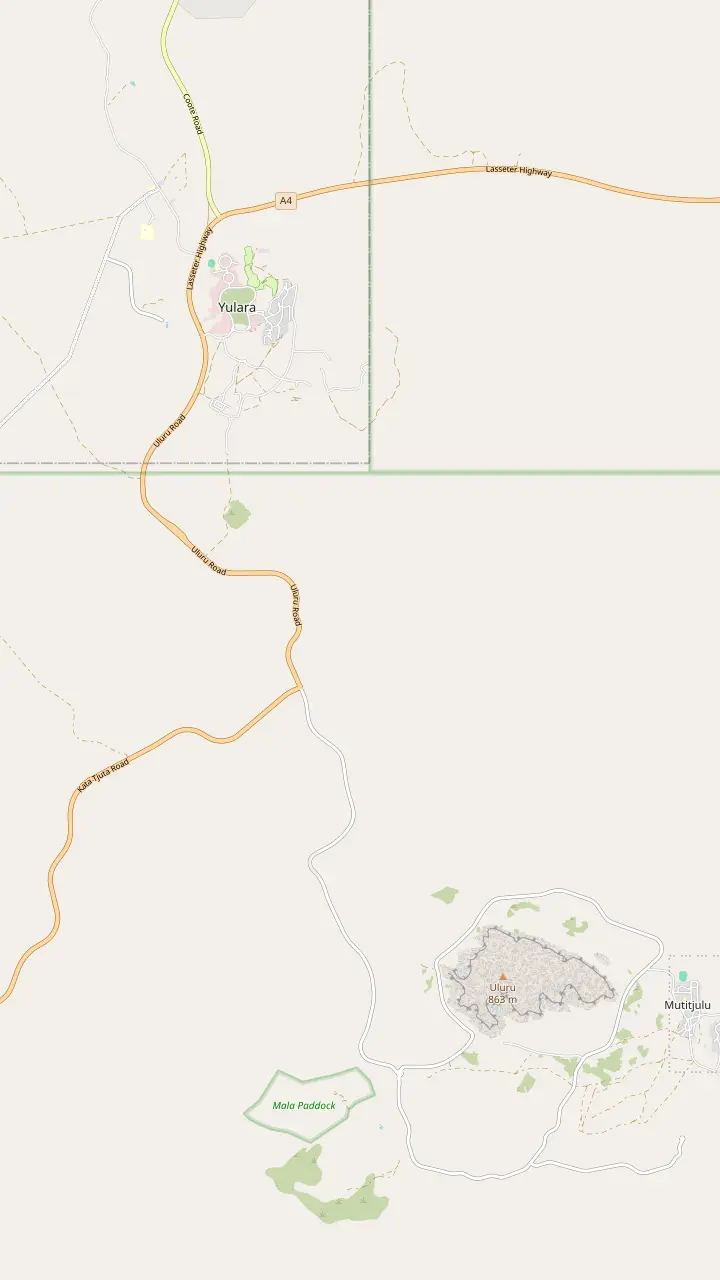
A resort lookout in the middle of the ring road, with Kata Tjuta in view.
Google MapsThe free resort shuttle runs between the hotels and the Town Square.
Google MapsFor cars only, 14.5 kilometres from the Yulara Visitor Centre.
Google MapsOpen to everyone until 4.00 pm, then kept for buses and coaches.
Google MapsRises 348 metres above the plain and is 9.4 km around.
Google Maps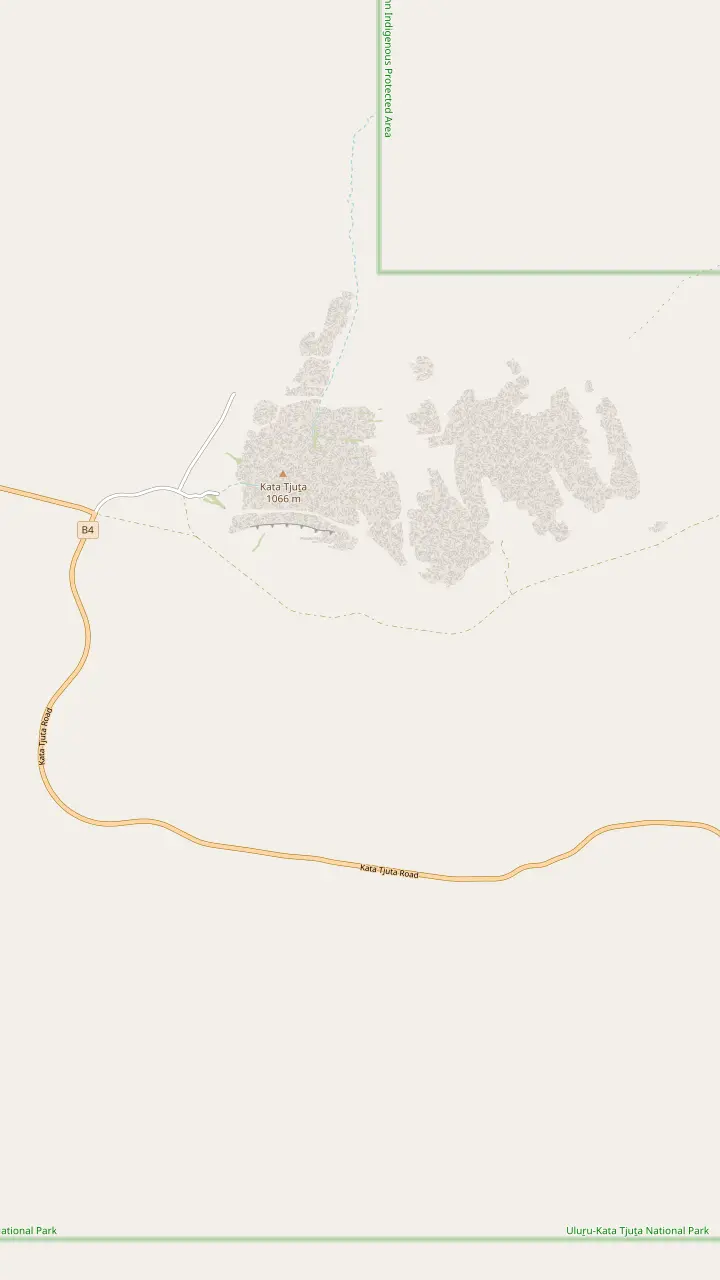
Picnic tables, water and toilets, 40 minutes from Yulara.
Google MapsKata Tjuta with Uluru on the horizon; usually quiet at sunset.
Google MapsA 2.6 km return walk whose benches are often empty at dusk.
Google MapsThe 36 domes rise up to 546 metres above the plain.
Google MapsMap data: © OpenStreetMap contributors
An Uluru sacred sites tour takes you from the bus to the foot of the rock, past caves, rock art and a waterhole that matter deeply to Anangu. This guide explains what you will see, what stays unseen and which rules come with it.
Editorial team, ulurusunsettour.com · Updated November 8, 2026 · Read in 7 min
Before the first stop, it helps to know what the word sacred means at Uluru. Parks Australia describes Tjukurpa as the foundation of Anangu culture, a religious philosophy that ties people to the land and to their ancestors.7 The stories also work like maps, telling people where important places lie, how to move between them and where water and food can be found.8 The rock is not a backdrop to that law; it is part of it.
Anangu speak of Tjukuritja, the physical evidence of the ancestral beings' activities that is still visible in the land.9 A crack, a cave or a mark on the rock face can therefore be a record of events, and walking around the base means following those stories on the ground.10 Tjukurpa is never written down; it is memorised and passed to the right people like an inheritance.11
Not everything is shared. Anangu share many details with outsiders, but the secret and sacred knowledge stays with senior people and has to be protected.12 Parks Australia goes further and asks visitors not to repeat or re-tell Tjukurpa stories at all.5 That is why this guide names places and tells you how to behave there, and leaves the stories themselves to the people who hold them and the rangers who tell what may be told.
Sacred walks at a glance
| Walk | Length | Time | Grade | What it holds |
|---|---|---|---|---|
| Kuniya walk | 1 km return1 | 30 to 45 minutes1 | Grade 21 | Mutitjulu Waterhole and rock art14,22 |
| Mala walk | 2 km return20 | 1 hour 30 minutes20 | Grade 220 | Mala caves and Kantju Gorge23 |
| Full base walk | 10.6 km loop21 | 3 hours 30 minutes21 | Grade 321 | Every section of the base21 |
Distances, times and grades from Parks Australia's walk pages.1,20,21
The heart of an afternoon sacred sites tour is the Kuniya walk. The record of the tour sold on this site lists a drive around the base, the Kuniya walk to Mutitjulu Waterhole with rock paintings, the Cultural Centre and the sunset viewing area. The walk itself is short: 1 km return, grade 2, and 30 to 45 minutes on foot.1 At its end lies water that never fully dries, a rarity at the rock.14
Parks Australia names this as the site of a creation story of Liru, the brown snake man, and Kuniya, the woma python woman.15 It adds that Anangu still use the caves here.16 You will see marks in the rock that your guide may point to; the account that goes with them belongs to Anangu, and the respectful choice is to listen and not retell it afterwards.
The waterhole is also a lush corner of a dry country, with tall grasses and river red gums where wallabies sometimes appear.17 Traditional Owners regularly bring important guests here, and the British Royals and the Dalai Lama have both visited.18 Although it is among the busiest spots in the park, Parks Australia notes it is often quiet at sunrise, at sunset and over lunch.19
The second sacred walk most visitors meet is on the other side of the rock. The Mala walk runs from the Mala carpark to Kantju Gorge, and it is the route used by the daily ranger-guided walk as well as most Uluru tours.2 It is 2 km return, grade 2, takes about 1 hour 30 minutes and has water and toilets.20 Along it are caves linked to the Mala, the rufous hare-wallaby people, among them one known as the kitchen cave.23
Parks Australia counts the Mala story among the most important in Tjukurpa.23 At the end of the path, Kantju Gorge is enclosed by sheer walls and has a deep calm that many walkers remember more than the rock face itself.29 Rangers lead the walk for free each morning: in the cooler May to September season they set off at 10.00 am, and in the warmer October to April season at 8.00 am.25
For anyone hoping to see an Uluru sacred site at sunset, the gorge has a second life. The Mala walk is crowded with tours mid-morning and late afternoon but surprisingly quiet at sunset, and the setting sun strikes the gorge directly, lighting it a fiery red under a deep blue sky.24,30 If you have your own car and have already watched a sunset from a viewing area, the gorge is a moving alternative for a second evening.
Plan your visit
Each wish below points to a way of meeting the sacred sites.
If I want culture and sunset in a single afternoon
The sacred sites and sunset tour
It combines the Kuniya walk, the Cultural Centre and the sunset area.
If I want to learn from a ranger for free
The ranger-guided Mala walk
Rangers guide it without charge, starting 8.00 am or 10.00 am depending on the month.25,28
If I want a quiet sacred place at dusk
Kantju Gorge with your own car
The Mala walk is surprisingly quiet at sunset.24
If I want to understand before I walk
The Cultural Centre first
The Tjukurpa Tunnel is the recommended opening stop.13
If I want the whole base
The full base walk
Allow 3 hours 30 minutes for the 10.6 km circuit.21
Where to slow down
Permanent water
End of the Kuniya walk
See the tours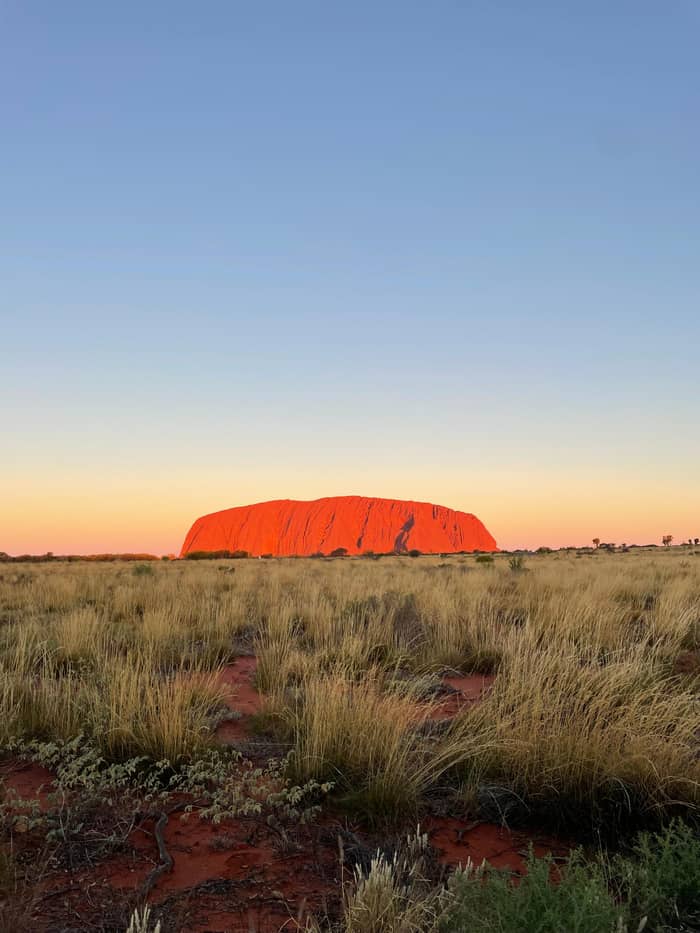
Best at dusk
End of the Mala walk
See the tours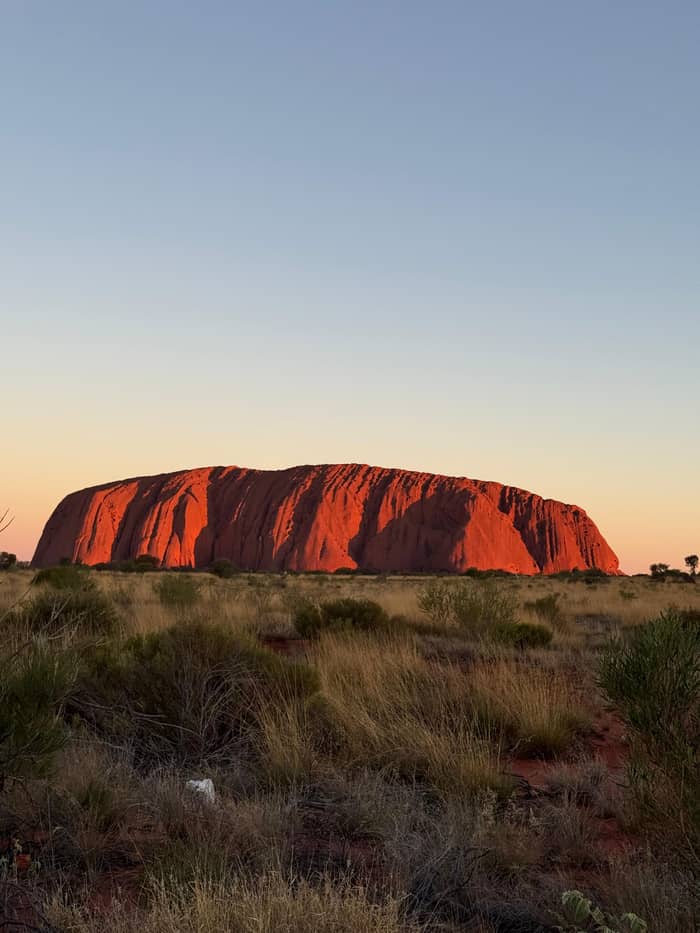
Context first
Start of every visit
See the toursThe paintings you see on these walks are layered teaching records. Parks Australia compares the rock surfaces to a classroom blackboard whose notes can only be fully read by those who attended the lesson.47 The most common colors are red, yellow, orange, white, gray and black, made from ochres, ash and charcoal.48 People are believed to have lived in the Uluru region for at least 30,000 years.49
Anangu Traditional Owners and park staff document and conserve around 80 rock art sites.50 The paint is fragile, and in early tourism many guides poured water over the art to brighten it for photographs, which damaged it before the practice was stopped.51 You can see art in several shelters along both the Mala walk and the Kuniya walk.22
The rule is simple: look, photograph where allowed, and never touch.52 Viewing platforms at the busiest sites keep feet and dust away. On a guided tour, stay behind the guide at these spots and wait for the group ahead to move on, since the shelters are small and the art sits at hand height in places.
Sacred sites tours
Choose a tour and your group size to see a from-price.
Compare 4 side by side
Choose a tour and your group size to see a from-price.
≈
View≈
View≈
View≈
ViewStarting prices on GetYourGuide, exchanged at the ECB reference rate. The booking page gives the exact price.
The afternoon in order
Pickup
Pickup is included from the resort.
Base drive
A bus loop with commentary from the guide.
Kuniya walk
A short walk to the water and the rock art.1
Cultural Centre
Displays and Anangu art before the light drops.13
Sunset
Sparkling wine and nibbles as the colors change.
Some places at the base are off limits to cameras. To Anangu, the features of the rock at these places carry meaning in the way scripture does, and are meant to be seen in person, on site, by the right people only.53 For that reason, photographing those sites is prohibited, and signs in the park mark where they are.3,4 Inside such areas you can still photograph plants, animals and people, but not the rock.
Between Kantju Gorge and Kuniya Piti runs the rock's north-east side, as sensitive as anywhere in the park.54 Ironically, that side faces the hotels and many evening experiences outside the park.55 Photograph it only from far away, wide, leaving out the top-left details.56
The kindest light for that side comes in the hour or two before sunset, according to Parks Australia, as shadow covers the sacred features by itself.57 At the sunset areas, the request is to show the rock whole rather than zooming in on details.58 Ask before photographing Anangu, and leave drones at home: they are banned in the park and penalties apply.45,59
Video
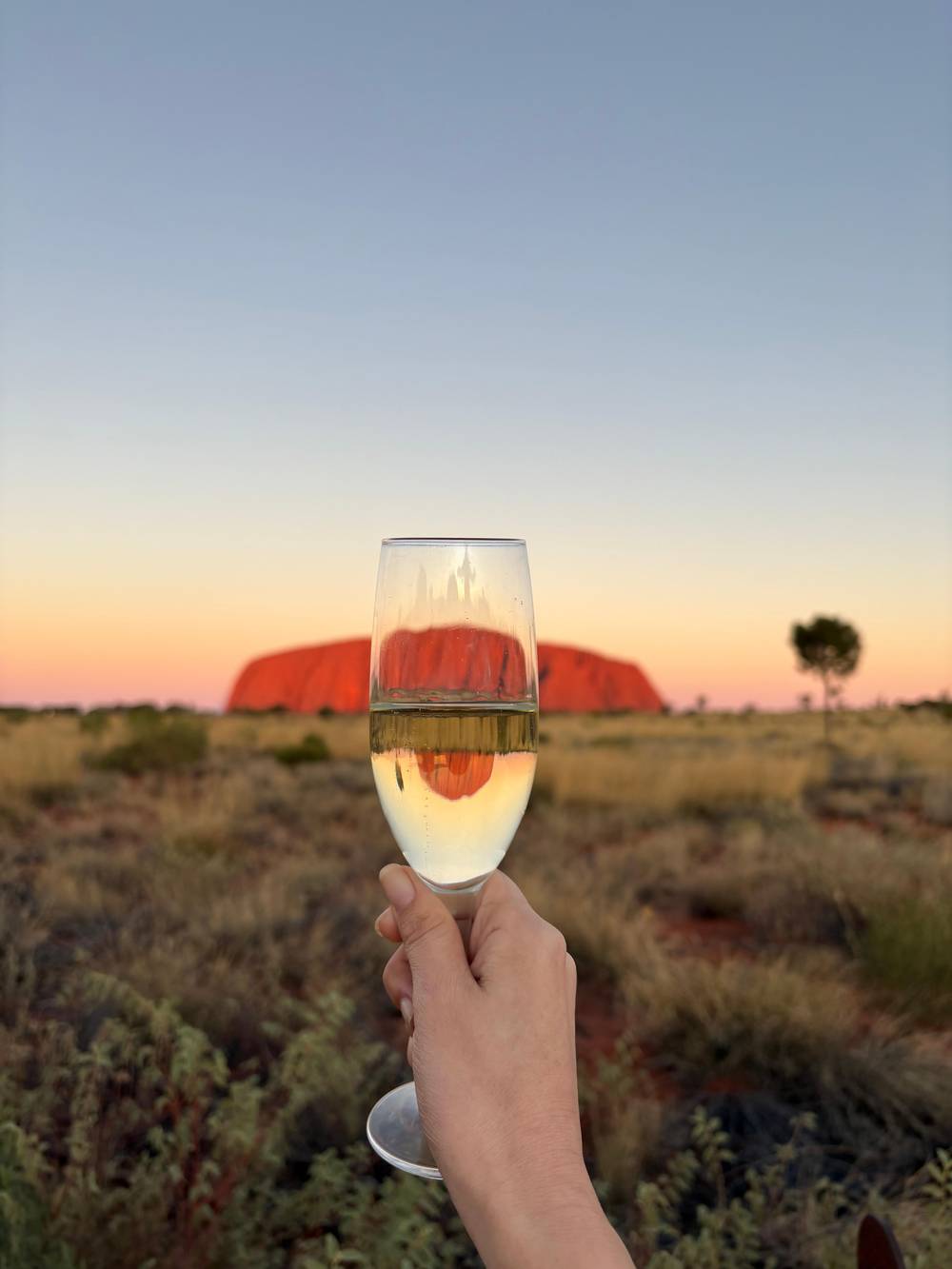
Australia's Northern Territory on YouTube · The video stays unloaded until you press play.
It is inappropriate for images of sensitive sites to be viewed elsewhere, so taking any photos of these places is prohibited.
On the walks
The Uluru sacred sites tour sold on this site combines the walks with a stop at the Cultural Centre before the sunset, and runs about 5 hours with an English-speaking guide. Parks Australia suggests the Tjukurpa Tunnel inside the centre as the very first experience of any visit, and recommends at least two hours to see the whole building properly.13,26
On a tour you will have less time than that, so prioritise. The tunnel and displays give the background to what you have just seen at the waterhole; the 2 art galleries, Maruku Arts and Walkatjara Art, sell work by Anangu artists.60 The centre itself is a free-form building of mud bricks made locally.61 If you need a snack, Ininti café there is your sole option within the park.27
After the centre, the bus heads to the sunset viewing area for the color change and a glass of sparkling wine. That makes the Uluru sacred sites and sunset combination a natural shape for a single afternoon: culture first, while the light is still high, then the rock at its most dramatic. In the cooler months the park gate shuts at 7.30 pm, later in summer, and the evening ends soon after the light goes.62
A few habits make a large difference. Restricted places, whether sacred, ceremonial, burial grounds or someone's home, are off limits to both feet and cameras.63 Staying on marked tracks and keeping off rock formations and boulders is the simplest way to avoid walking into a sacred area by mistake.44 A friendly palya, the Anangu greeting that also means thank you and goodbye, is always welcome.46
Conversations follow their own rhythm. Anangu value careful listening, and a silence after your question usually means someone is thinking about the answer, not ignoring you.64 The Anangu community near the waterhole, which shares its name, needs a permit or permission to enter, and tours stop at the waterhole walk.65
The land you are walking on belongs to Anangu, who lease it to the Australian Government and manage it jointly with Parks Australia.66 The title deeds were handed back at the Mutitjulu oval on 26 October 1985.67 UNESCO listed the park in 1987 and recognised its cultural landscape in 1994, and 25% of every park pass goes straight to Traditional Owners as lease payments.68,69,70
FAQ
Its record names a loop around the base, Mutitjulu Waterhole via the Kuniya walk, a Cultural Centre stop and the sunset area.
It takes 30 to 45 minutes and is graded 2.1
Parks Australia asks you to admire and photograph the art but never touch it.52
Mutitjulu is a closed community, open by permit or permission only.65
Sources
More to read
Planning an evening at Uluru? A real person answers here.