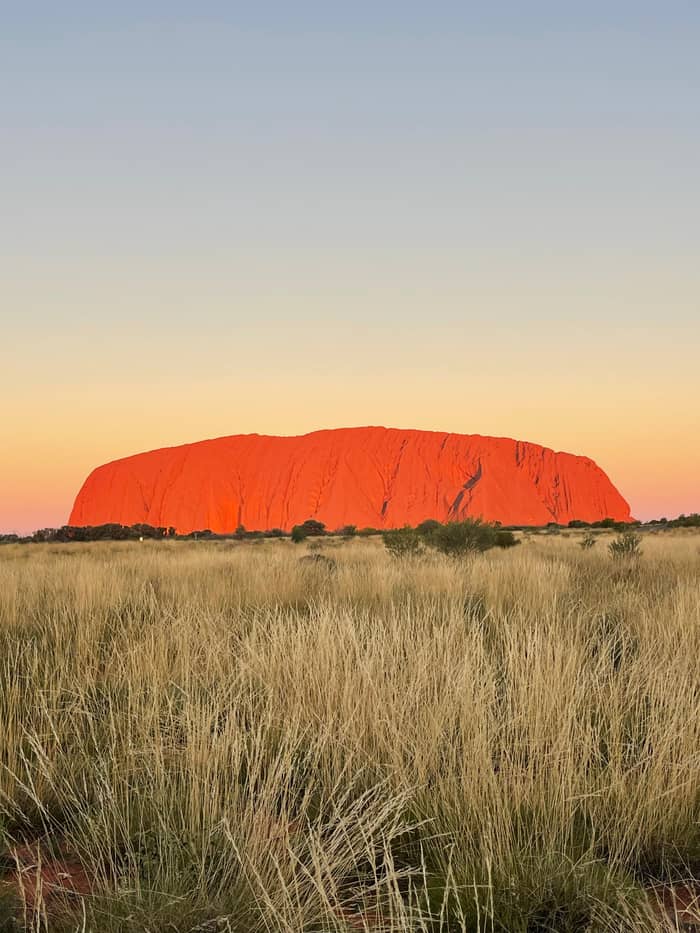
Richest color
Sunset viewing area
West of the domes
See Kata Tjuta tripsGuides
Language
Currency
See open datesfrom $147 · cancelling is freeWhere is your stop
The quick take
For an Uluru Kata Tjuta sunset, drive about 40 minutes from Yulara to the Kata Tjuta sunset viewing area, or use the dune area for Uluru on the horizon.
Where to stand
Discover 15 stops
Pick a route, then tap a marker or a stop for notes and a Google Maps link.
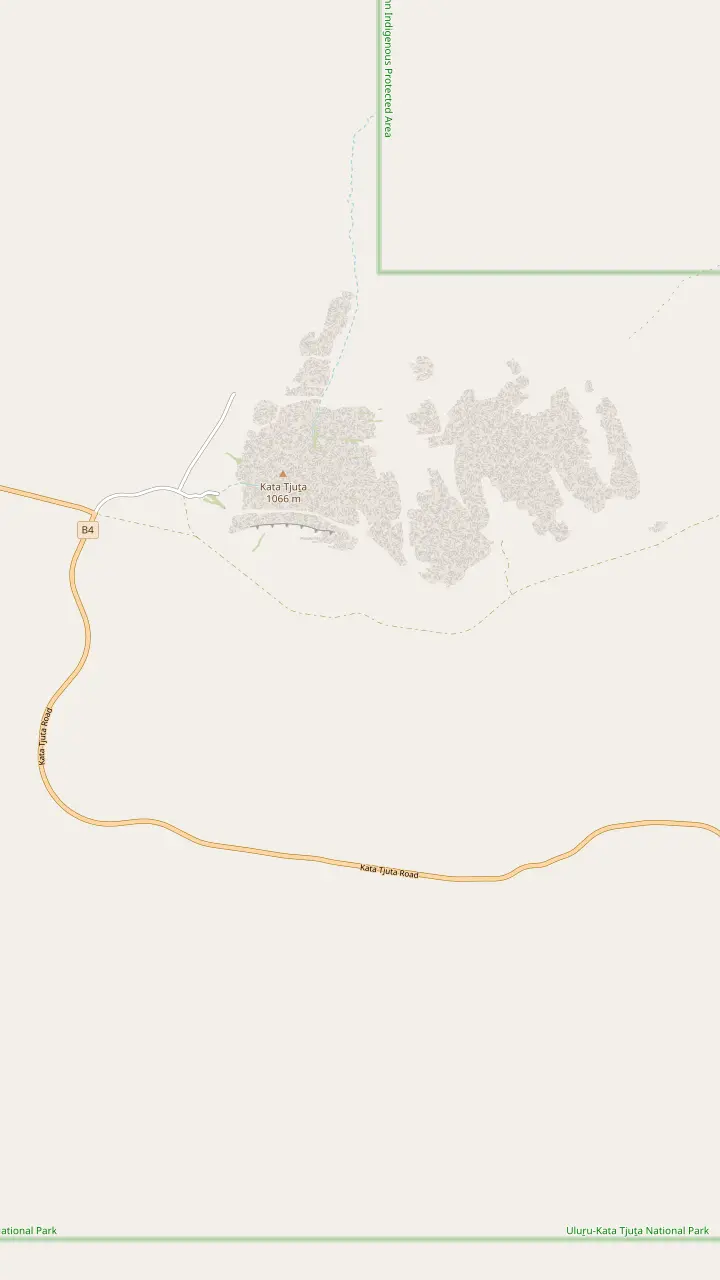
Picnic tables, water and toilets, 40 minutes from Yulara.
Google MapsKata Tjuta with Uluru on the horizon; usually quiet at sunset.
Google MapsA 2.6 km return walk whose benches are often empty at dusk.
Google MapsThe 36 domes rise up to 546 metres above the plain.
Google Maps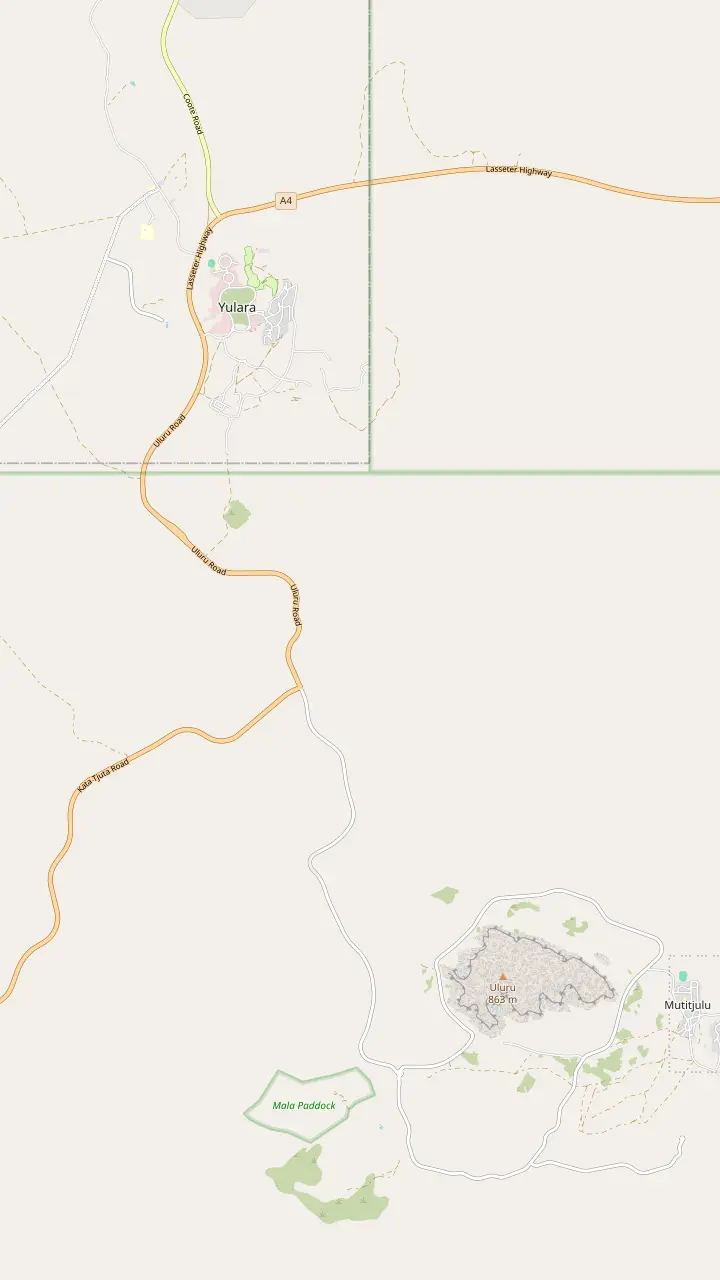
A resort lookout in the middle of the ring road, with Kata Tjuta in view.
Google MapsThe free resort shuttle runs between the hotels and the Town Square.
Google MapsFor cars only, 14.5 kilometres from the Yulara Visitor Centre.
Google MapsOpen to everyone until 4.00 pm, then kept for buses and coaches.
Google MapsRises 348 metres above the plain and is 9.4 km around.
Google Maps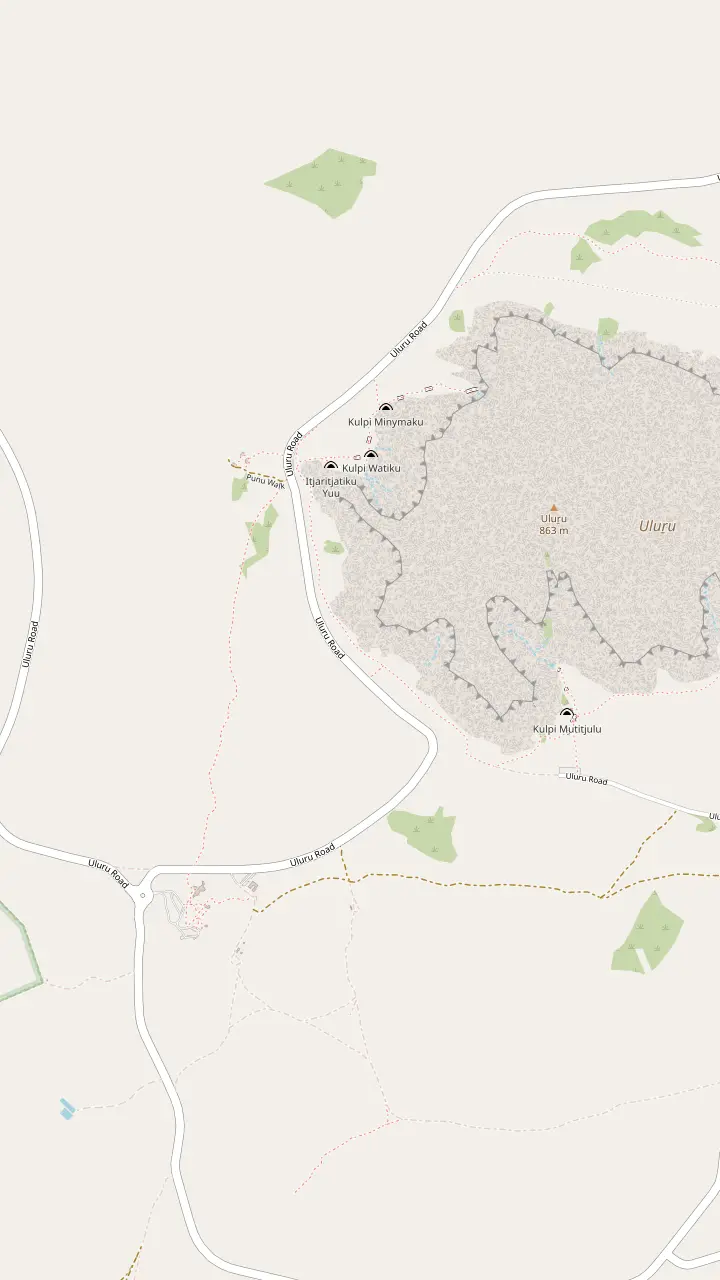
A 1 km return path from the Kuniya carpark to Mutitjulu Waterhole, one of the few permanent water sources at the rock.
Google MapsThe section of the base walk linking the Kuniya walk with the Mala carpark, where the rock slants down to the path.
Google MapsFrom the Mala carpark to Kantju Gorge: 2 km return, the route of the free ranger-guided walk.
Google MapsQuiet at sunset, when the setting sun lights the gorge walls a fiery red.
Google MapsLinks the Mala carpark with the Cultural Centre; not part of the base walk loop.
Google MapsOpen 7 am to 5.45 pm daily; allow at least two hours.
Google MapsMap data: © OpenStreetMap contributors
Most evening tours point their coaches at Uluru, which leaves the domes of Kata Tjuta to a quieter crowd. For an Uluru Kata Tjuta sunset with space around you, here is where to stand, how long the drive takes and what Anangu ask of photographers.
Editorial team, ulurusunsettour.com · Updated November 8, 2026 · Read in 7 min
The domes west of Uluru are easy to overlook, yet at sunset they hold their own against the rock. Parks Australia describes 36 domes covering more than 20 square kilometers and rising up to 546 meters above the plain.5 That is taller than Uluru, which rises 348 meters.6 The name is Pitjantjatjara for many heads, a good description of the cluster you see from the road.7
The domes are sacred in a particular way. For Anangu, Kata Tjuta is an extremely important site for men's business, and although the tracks are open to all, what the formations mean is knowledge that Anangu keep to themselves.8 That privacy shapes the whole experience: you come here for the landscape, the light and the silence, and you leave the meaning to those who hold it.
The rock itself colors differently from Uluru. Look closely and you will see cobbles of granite and basalt locked in a sandy, muddy matrix, a texture Parks Australia compares with plum pudding.9 At sunset that rough surface breaks the light into shadows and highlights, and the domes read as a range of separate shapes rather than a single smooth face.
Side by side
| Spot | From Yulara | Water and toilets | Photo request | Crowds at dusk |
|---|---|---|---|---|
| Kata Tjuta sunset area | 40 minutes1 | Yes1 | 3 domes in shot4 | Usually busy12 |
| Kata Tjuta dune area | 35 minutes15 | No15 | 5 domes in frame16 | Usually quiet2 |
| Walpa Gorge | Next to the domes | Water only17 | Both sides in frame18 | Mostly empty19 |
| Uluru car sunset area | 15 to 20 minutes20 | No20 | Whole rock only21 | Lively in holidays22 |
Drive times and facilities from Parks Australia; times are approximate.1,15,20
The main place for the Uluru Kata Tjuta National Park sunset is the dedicated viewing area on the western side of the domes. Parks Australia describes picnic facilities there and suggests bringing dinner while the domes move from pink to deep red as the sun sets.3 It has wheelchair access, drinking water and toilets, which is unusual among the park's viewing spots.1
Be ready for company. The area is normally full of people and cameras at dusk, and Parks Australia's tip for escaping them is to drive on to Walpa Gorge, where the benches by the track are generally empty at that hour.12 The area is also a long way from town: Parks Australia gives 40 minutes from Yulara, and Tourism Central Australia puts it 51 kilometers from the Yulara Visitor Centre.1,13
Photography here comes with a specific request. Kata Tjuta is a highly culturally sensitive area, and Anangu ask that you keep at least three domes in every photo taken from this viewing area, to avoid revealing sacred places.4 It is an easy rule to follow with a normal lens, and it suits the landscape anyway: the drama of the place is the group, not a single dome.
For the full panorama, use the dune viewing area. It gives a wide view of Kata Tjuta with Uluru on the horizon, and Parks Australia notes that it draws crowds at dawn yet tends to be calm at sunset.24,2 There are shelters for a picnic and tracks to explore, but no water and no toilets.25,15
The light behaves differently here. From this angle the sun does not strike the domes directly at sunrise or sunset, so they can look quite dark, with strong contrast between lit edges and shadow.23 If you want saturated red, go to the sunset viewing area; if you want mood, layers and Uluru in the same frame, the dune is the better choice. Anangu ask that at least 5 domes stay in the frame from here.16
The dune area is closer to Yulara than the sunset area: 35 minutes by Parks Australia's estimate and 35 kilometers from the Yulara Visitor Centre according to Tourism Central Australia.15,26 That makes it a good compromise on a short winter evening when the park gates close at 7.30 pm.27
Your evening
Choose the line closest to what you want and go where it points.
If I want the deepest red on the domes
The sunset viewing area
The domes turn from pink to deep red there.3
If I want Uluru in the same view
The dune viewing area
Uluru sits on the horizon behind the domes.24
If I want to escape the crowd
Walpa Gorge benches
They are mostly empty at the end of the day.19
If I have no car
The hop-on hop-off sunset trip
It includes pickup, Walpa Gorge and sunset.10
If I want a guide
The small-group afternoon tour
3 hours with up to 15 passengers.
Pick your vantage
Richest color
West of the domes
See Kata Tjuta trips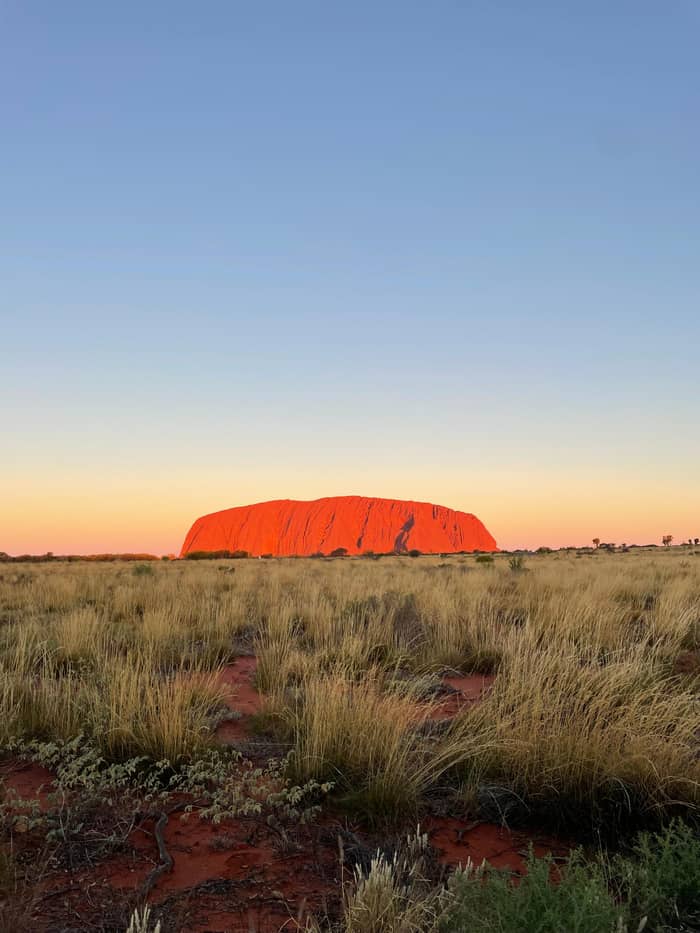
Quiet at sunset
Panorama with Uluru
See Kata Tjuta trips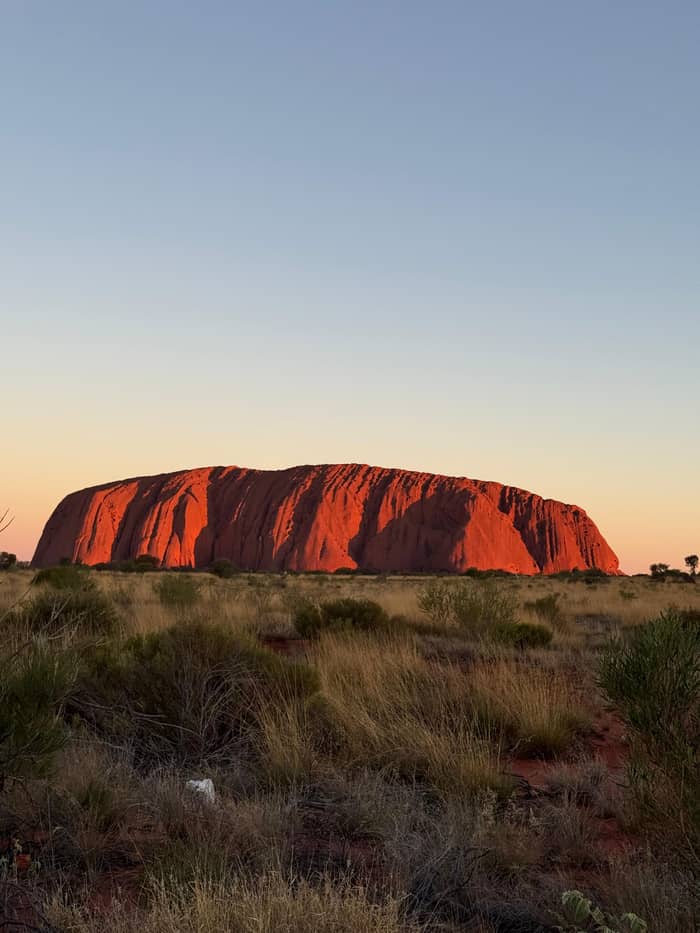
Most solitude
Between the domes
See Kata Tjuta tripsWalpa Gorge is the quiet alternative. Parks Australia notes that at the end of the day many people go to the sunset viewing area, leaving the benches along the gorge mostly empty, and suggests sitting there to watch the colors shift on the gorge walls as the sun sinks.19 The walk is 2.6 km return, grade 3, about 1 hour, with water but no toilets.17
The gorge carries its own requests. Anangu ask that any photo, film, painting or drawing of the gorge shows both of its walls, so that no sacred place is revealed.18 Parks Australia's page on the walk sums up the spirit in a few words: move softly, step lightly and keep to the path.44
Do not confuse the gorge with the longer walk nearby. A full lap of the Valley of the Winds needs 3 to 4 hours, and as a sensitive men's area it comes with a request to leave the domes out of every picture and clip from start to finish.45,46 For an evening outing with a camera, Walpa Gorge or the viewing areas are the right choice.
Ways to the domes
Choose an option and your group size for a from-price.
Compare 3 side by side
Choose an option and your group size for a from-price.
≈
View≈
View≈
ViewStarting prices on GetYourGuide, exchanged at the ECB reference rate. The booking page gives the exact price.
Without a car
The 2 evenings feel different. At Uluru the classic image is a single rock glowing in front of you, watched from the roadside viewing areas, the car area being 15 to 20 minutes from Yulara by Parks Australia's reckoning.20 At Kata Tjuta you drive about 45 minutes from the resort and watch a cluster of domes, with fewer people and a wilder setting.47
Facilities differ too. The Kata Tjuta sunset viewing area has water and toilets, while the Uluru car sunset area has neither.1,20 Alcohol is another difference: Parks Australia allows the public to drink only at the 2 Uluru sunset areas, so a sunset drink at Kata Tjuta is not permitted outside an approved tour operator's licence.48
Both evenings run on the same clock. In mid-July the sun is down by 6:13 pm with the exit gate shutting at 7.30 pm, so from Kata Tjuta you have a little over an hour to leave after sunset.49,27 In summer the margin is wider, with the gates open until 9.00 pm in December, January and February.27
Video
tatsuki on YouTube · The video stays unloaded until you press play.
Aṉangu ask that you keep at least three domes in shot when photographing Kata Tjuṯa from this location. This is to avoid revealing sacred places.
If you are looking for a Kata Tjuta and Uluru sunset tour, note that the sunset tours listed on this site head to Uluru, not to the domes. Without wheels of your own, the hop-on hop-off shuttle is the easiest ride to the domes at dusk. Its Kata Tjuta sunset trip includes hotel pickup, a photo stop at the Kata Tjuta sunrise platform, a 1-hour walk in Walpa Gorge and sunset at the Kata Tjuta viewing platform.10
The hop-on hop-off pass sold on this page is valid for 1 day and includes one return transfer to Kata Tjuta, with morning and afternoon options; the 3-day pass includes 2. It is priced from $98, and the national park pass is bought separately from Parks Australia.50 The Uluru and Kata Tjuta buses run on separate routes, so you return to the resort between them.11
A guided alternative is the small-group afternoon tour to Kata Tjuta: 3 hours, a maximum of 15 passengers, pickup from resort accommodation and a walk between the domes, from $130. Its record does not promise a sunset, so check the start time against the sunset table before you book if the light is what you are after.
Start with the pass and the season. A park pass costs AUD 38 for 3 days for adults, and under-18s go free; you scan it at the entry station's left-hand lane.43,51,52 The most pleasant months by Parks Australia's account run from May to September, when afternoons generally sit within 20°C and 30°C.53
If you are driving, all park roads are sealed and a normal 2WD car is fine.54 Yulara has few hire cars, so reserve yours weeks in advance, as the park authority urges.55 Leave the resort with enough time for the drive and a short walk before the colors start, and fill a water bottle, since the park's guidance is a liter or more for every hour on foot.56
Pack for the drive home. The road back is dark, temperatures fall fast once the sun is gone, and the gates close at fixed times by month.27 Seeing both sunsets in the same evening is not possible: the sun sets only once, and the domes and the rock lie a long drive apart. Give each its own evening if your pass and your stay allow it.
FAQ
The dune viewing area shows Kata Tjuta with Uluru on the horizon.24
The operator runs a Kata Tjuta sunset trip with a Walpa Gorge walk.10
The public may drink only at the 2 Uluru sunset areas.48
Anangu ask for no photos of Kata Tjuta on that walk.46
Sources
More to read
Planning an evening at Uluru? A real person answers here.